
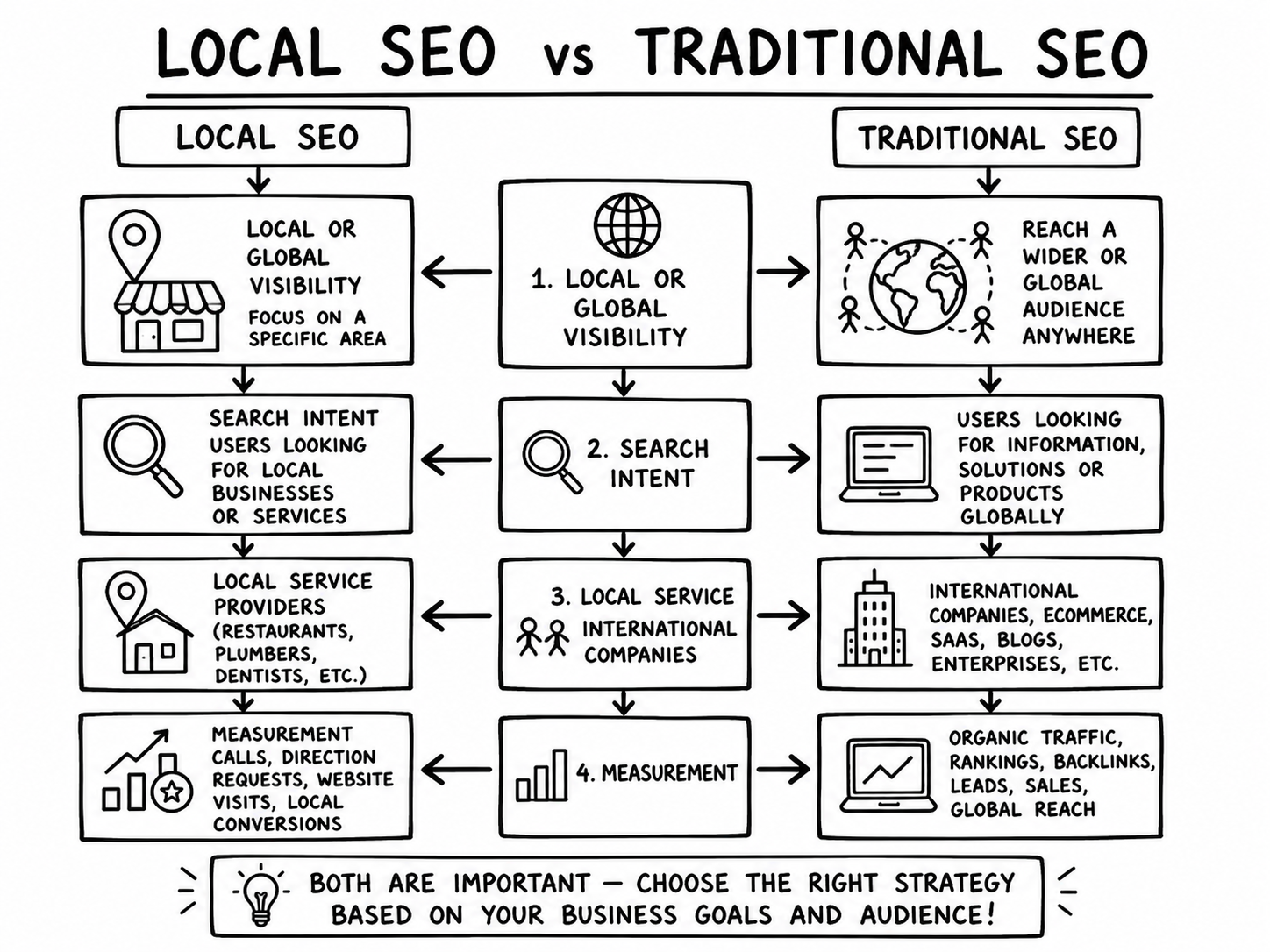
Local SEO vs traditional SEO can feel confusing because both aim to help your business appear in search results.
One person may be ready to book a nearby service today. Another may spend weeks comparing options, reading guides, and checking reviews before taking action.
That difference changes everything: keywords, pages, rankings, content, and even how you measure success.
So before investing in SEO, you need to know which approach matches your customers, your market, and your growth goals.
Local SEO vs Traditional SEO: What’s the Difference?
The main difference between local SEO and traditional SEO is the type of searcher you’re trying to reach.
Local SEO targets people looking for a business, service, or store in a specific area, usually with immediate intent. Someone searching “emergency plumber near me” probably wants to call today, not read five guides.
Traditional SEO targets broader searches that may come from anywhere, so the journey can be longer. A person searching “how to choose accounting software” may still be researching.
So local SEO is usually more location-driven and action-focused, while traditional SEO is broader, content-led, and built for reach.
| Factor | Local SEO | Traditional SEO |
| Main goal | Get visibility in a specific city, region, or service area | Get visibility nationally, globally, or across a broader market |
| Search intent | Often immediate and action-based | Can be informational, commercial, or transactional |
| Common keywords | “near me,” “[service] in [city],” “open now” | “best [tool],” “how to [solve problem],” “[product] alternatives” |
| Main search results | Google Maps, local pack, Google Business Profile | Standard organic results, blog posts, product pages, landing pages |
| Key ranking factors | Proximity, reviews, Google Business Profile, citations, local relevance | Content quality, backlinks, technical SEO, topical authority, user intent |
| Best for | Local service providers, stores, restaurants, clinics, multi-location business | SaaS companies, e-commerce brands, publishers, online service businesses |
| Conversion path | Calls, direction requests, bookings, form fills, store visits | Email signups, trials, purchases, demo requests, content engagement |
| Content focus | Local service pages, city pages, location pages, review-driven content | Blog posts, comparison pages, product pages, guides, category pages |
| Competition type | Competes mostly with nearby businesses | Competes with websites across a wider market |
| Speed of results | Can sometimes produce faster leads in smaller markets | Usually takes longer, especially for competitive keywords |
| Measurement | Calls, map views, direction requests, bookings, local rankings | Organic traffic, rankings, conversions, revenue, assisted conversions |
What is Local SEO?
Local SEO is the process of improving a business’s visibility for searches tied to a specific location. Instead of trying to reach everyone, it helps you show up when people nearby search for services, products, or places they can contact or visit.
These searches often include terms like “near me,” “in Austin,” “open now,” or “best dentist in Chicago.”
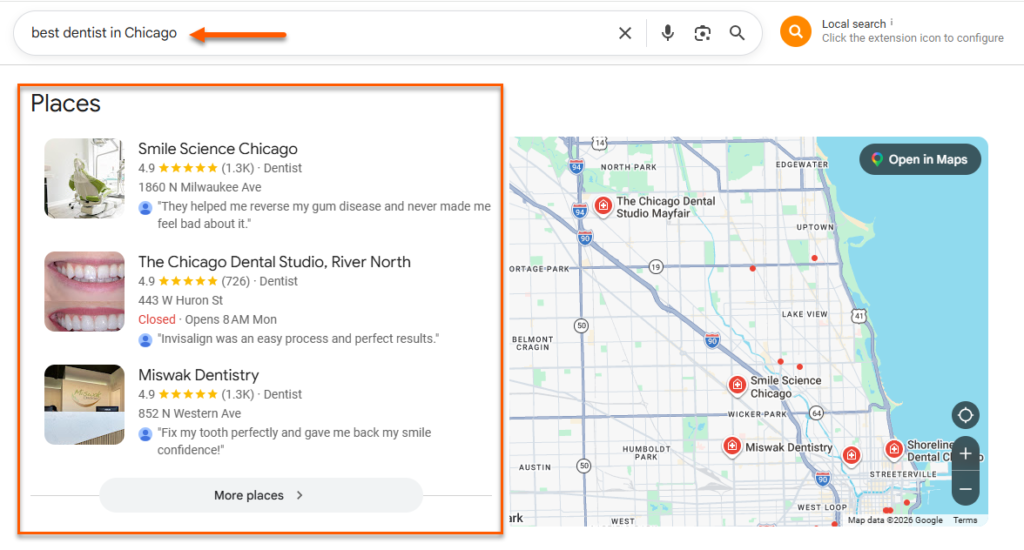
The main goal is simple: put your business in front of people who already have local intent. And that matters because these users usually don’t want to browse forever. They want to call, book, get directions, compare reviews, or visit.
Where Local SEO Shows Up
Local SEO shows up in a few important places across Google. The most visible one is Google Maps, where users compare nearby businesses based on distance, reviews, opening hours, and categories.
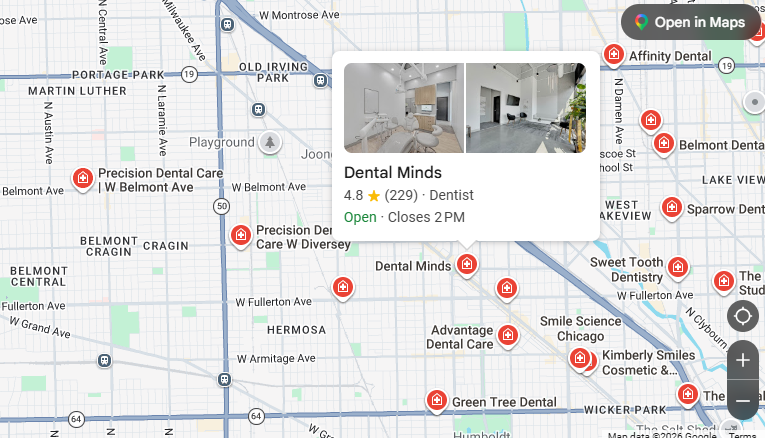
It also appears in the local pack, the group of three business listings that often shows near the top of Google Search for local queries.
Then there’s the Google Business Profile itself, which displays your business name, address, phone number, photos, services, reviews, and updates. For many local businesses, this profile gets more attention than the website.
That can feel strange, but it’s true in many searches.
Typical Businesses That Need Local SEO
Local SEO matters most for businesses that serve customers in specific areas.
- Service-based businesses need it because people often search locally when they need help fast, like a lawyer, dentist, plumber, gym, chiropractor, or cleaning company.
- Brick-and-mortar stores also depend on it because customers want directions, hours, product availability, and reviews before visiting.
- Multi-location businesses need local SEO too, but at a larger scale.
Each location should have its own local presence so Google understands where it operates and who it serves. Without that, even a strong brand can lose searches to smaller local competitors.
What is Traditional SEO?
Traditional SEO is the process of improving a website so it ranks for broader, non-location-specific searches.
Instead of trying to appear for “dentist near me” or “law firm in Dallas,” the goal is to rank for keywords people search from anywhere, like “best project management software,” “how to reduce customer churn,” or “running shoes for flat feet.”
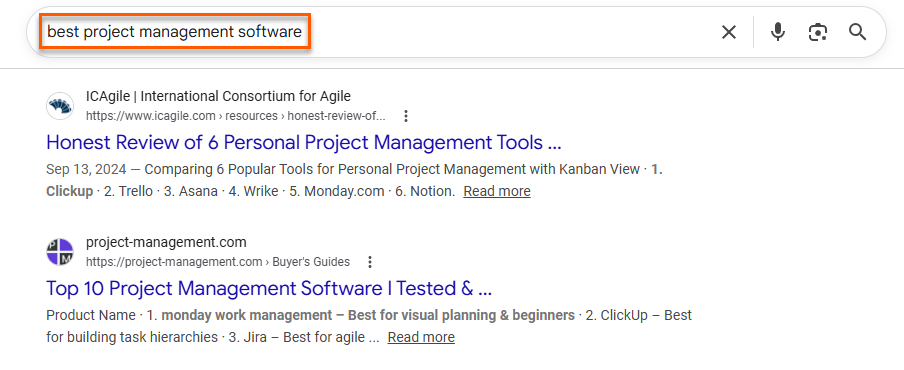
Traditional SEO usually focuses on national or global visibility. The core work includes keyword research, content creation, technical SEO, internal linking, and backlinks.
It helps businesses attract people at different stages, from early research to product comparison and purchase.
Where Traditional SEO Shows Up
Traditional SEO mostly shows up in the standard organic search results, often called the blue-link results. These are the regular website pages you see below ads, featured snippets, local packs, and other search features.
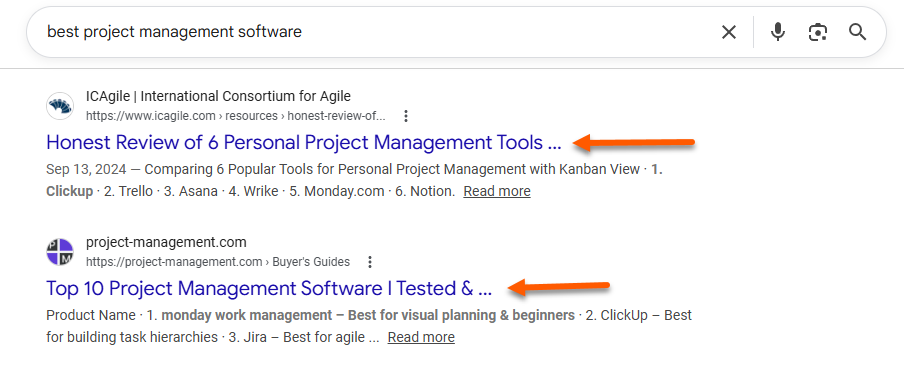
A ranking page could be a blog post, a product page, a category page, a comparison page, or a landing page.
For example, someone searching “best email marketing tools” may see listicles, software pages, and review sites.
Someone searching “how to clean leather shoes” may see tutorials and product guides. The format changes, but the goal stays the same: earn visibility through useful, relevant pages.
Typical Businesses That Use Traditional SEO
Traditional SEO works well for businesses that can sell, educate, or generate demand beyond one local area.
- SaaS companies use it to rank for product-led and problem-led searches, especially keywords tied to use cases, alternatives, comparisons, and category pages.
- E-commerce brands use it to bring buyers to product and category pages, not only blog content.
- Media sites and content-driven websites also rely on it heavily because their business model often depends on traffic, subscribers, or ad revenue.
In simple terms, traditional SEO fits businesses that need reach at scale rather than visibility in one city or service area.
Can You Combine Local SEO and Traditional SEO?
Yes, you can combine local SEO and traditional SEO.
Local SEO helps you capture people who are ready to act now. They search for a service in a specific city, compare nearby options, read reviews, and make a decision. That’s where local service pages, Google Business Profile optimization, and local reviews matter.
Traditional SEO works more like a long-term growth channel. It helps you answer broader questions, build topical authority, and bring in people before they search for a provider directly.
Together, local SEO and traditional SEO can cover both urgent buyers and early-stage researchers.
Let’s look at an example.
A law firm might create pages for
- Personal injury lawyer in Austin,
- Car accident lawyer in Dallas, and
- Wrongful death lawyer in Houston.
Then, the blog supports those pages with broader topics like
- What to do after a car accident or
- How injury claims work.
The key part is internal linking. Blog posts should link to the relevant local service pages, and local pages can link back to helpful guides. This makes the site easier for users and search engines to understand.
Local SEO vs Traditional SEO: Choose the Best Strategy
Understanding local SEO vs traditional SEO helps you choose the right strategy for your business model.
Local SEO works best when customers need a nearby provider and want to act quickly. Traditional SEO works better when you want wider reach, long-term traffic, and visibility across different stages of the buyer journey.
Some businesses need one more than the other, while many need both.
The real goal is matching your SEO strategy to how your customers actually search.
