
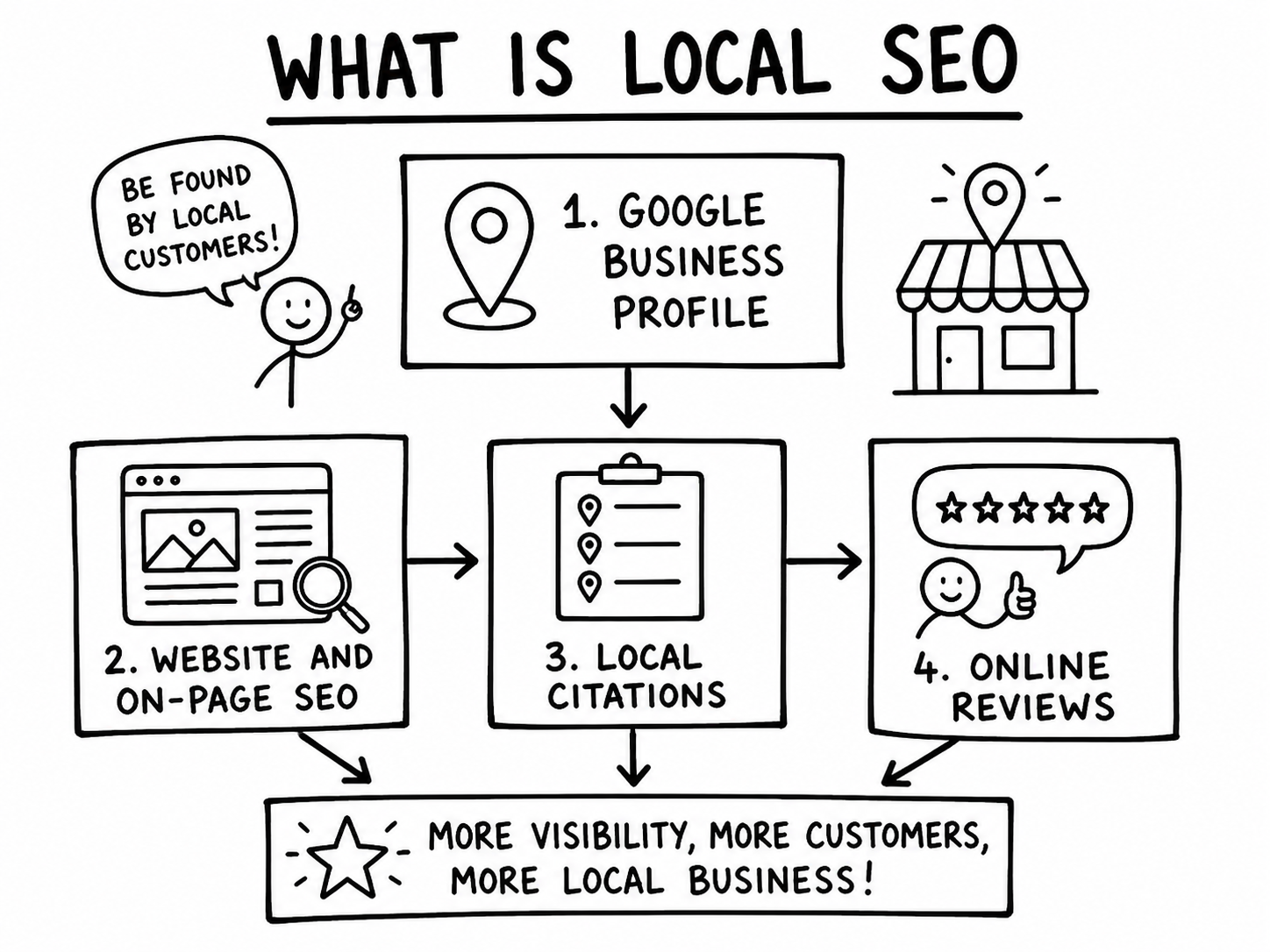
Local SEO helps your business appear when nearby customers search for what you offer.
Someone looking for a dentist, plumber, gym, lawyer, or restaurant usually wants options close to them, not a company three states away.
That is where local search becomes powerful. It helps you show up on Google Search, Google Maps, and local results when people are ready to call, book, visit, or compare providers.
In this guide, you’ll learn what local SEO means and how it works.
What is Local SEO?
Local SEO is how you make your business show up when people search for services in a specific area. Think of searches like “plumber near me” or “coffee shop in Chicago.” Instead of competing globally, you’re trying to appear in local results on Google Search and Maps.
What makes it different from regular SEO is the location factor. Google looks at proximity, relevance, and prominence to decide who shows up. So even a smaller business can outrank bigger brands… if it’s closer, more relevant, and trusted locally.
How Local SEO Works?
1. Google Understands Location Intent
Google can tell when someone wants a nearby business, even when they don’t type a city name. A search like “dentist” may look broad, but if the searcher uses Google from a phone, Google often treats it as a local search.
That is why the results can change depending on where the person searches from.
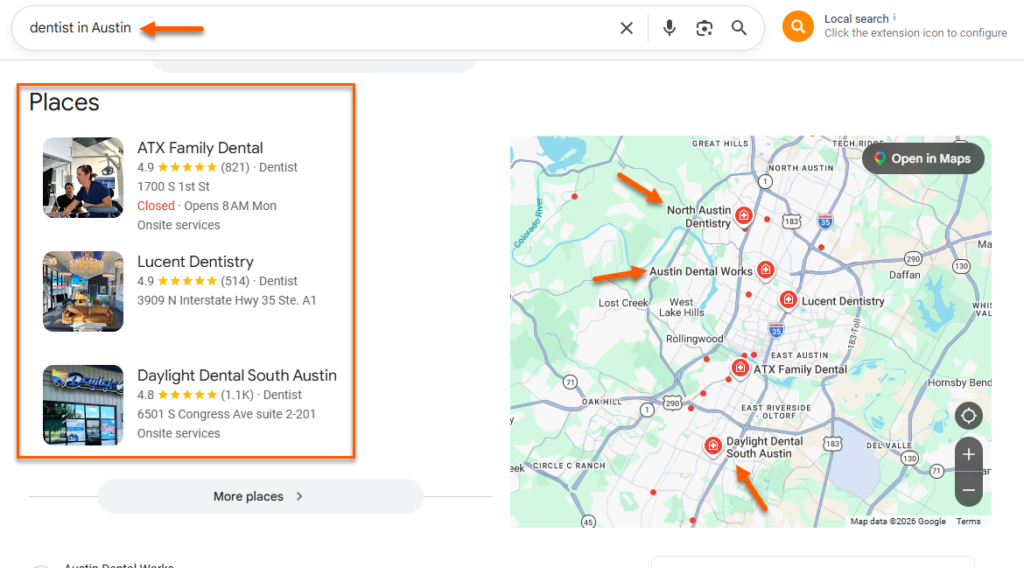
There’s also explicit local intent. Someone typing “dentist in Austin” tells Google exactly where they want the service.
But “dentist near me” sends almost the same signal, just based on the searcher’s current location.
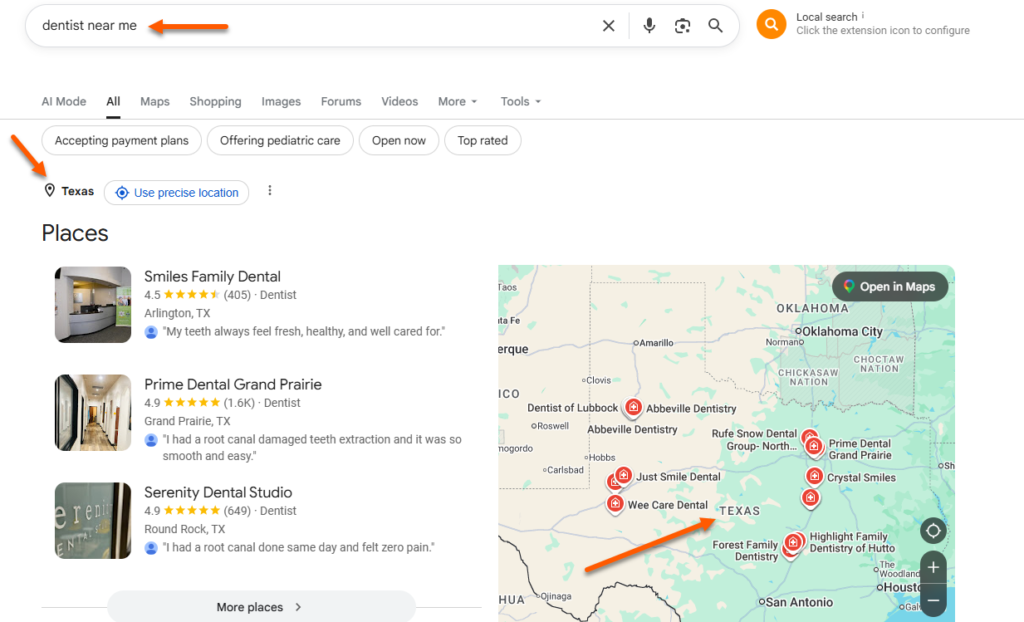
This matters because local SEO helps your business appear when people are searching with real buying intent, not when they’re casually reading.
2. Google Uses Local Ranking Factors
Local SEO works because Google tries to match the searcher with the most useful nearby business. It mainly looks at three things:
- Proximity,
- Relevance, and
- Prominence.
Proximity means how close your business is to the searcher or the location they typed.
Relevance means how well your business matches the search. For example, a family dental clinic may not show up as strongly for “emergency dentist” unless its profile and website clearly mention emergency services.
Prominence is about trust and reputation. Google looks at signals like reviews, local links, mentions, business information, and overall authority.
So, yes, distance matters. But distance alone won’t carry a weak business profile or a thin website.
3. The Role of Google Business Profile
Your Google Business Profile is one of the biggest parts of local SEO. It’s the business listing that can show your name, reviews, photos, opening hours, services, phone number, website link, and directions.
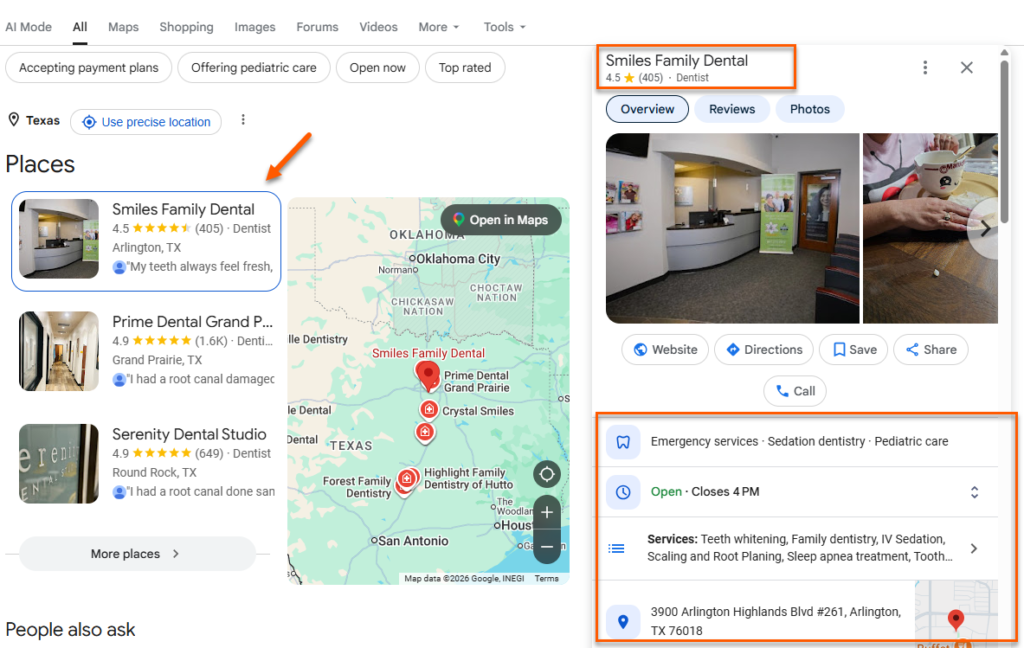
When someone sees businesses in the map pack, those listings usually come from Google Business Profiles.
This profile matters because many local customers don’t need to visit your website before taking action. They may call you directly, check your reviews, request directions, or compare your opening hours with another business.
That makes your profile more than a listing. It can become a mini landing page inside Google.
A complete, accurate, and active profile gives Google more reasons to trust your business and show it to nearby searchers.
Why Local SEO Matters for Businesses
1. High-Intent Traffic That Converts Faster
Local SEO brings you people who are already close to taking action. Someone searching “emergency plumber near me” or “best chiropractor in Dallas” usually has a real problem and wants a solution soon.
They are not browsing for fun. They are comparing options, checking reviews, and deciding who to call.
That’s why local traffic can turn into calls, bookings, visits, and form submissions faster than broader website traffic.
A blog reader may need weeks before becoming a customer. A local searcher may need ten minutes. For service businesses, that difference matters a lot because speed often wins the lead.
2. Visibility in the “Map Pack”
The map pack is a group of three local business listings that often appear near the top of Google results. It usually shows the business name, rating, reviews, location, hours, and quick actions like call, website, or directions.
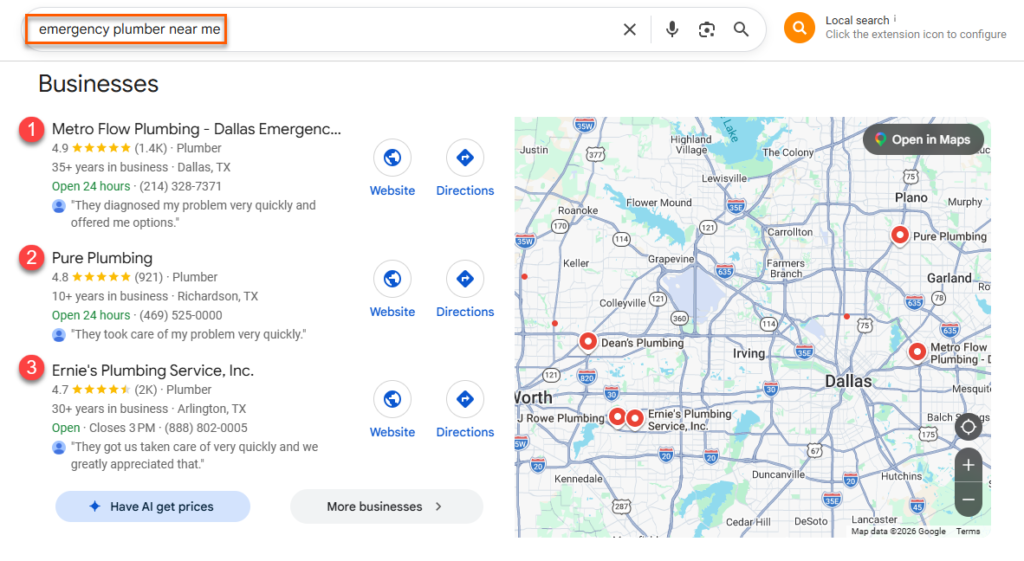
This section gets attention because it gives searchers what they need without making them dig. They can compare nearby businesses quickly and choose one based on distance, reviews, and trust signals.
In many local searches, the map pack can feel more useful than the normal organic results below it. If your business shows there, you earn visibility at the exact moment people are ready to choose.
3. Lower Acquisition Cost Over Time
Paid ads can bring leads quickly, but the moment you stop paying, the traffic usually stops too.
Local SEO works differently. It takes time, yes, and anyone promising instant results is probably selling hope more than strategy. But once your profile, website, reviews, and local pages start performing, they can keep bringing leads without paying for every click.
That can lower your customer acquisition cost over time. You still need work, updates, and review generation, but strong local visibility becomes an asset.
A good local SEO strategy can help you depend less on ads while still bringing in steady calls, bookings, and walk-ins.
Key Components of Local SEO
#1. Google Business Profile Optimization
Your Google Business Profile is usually the first thing people see before they visit your website. So it needs more attention than many businesses give it.
Start with the basics:
- Choose the right primary category,
- Add relevant secondary categories,
- List your services,
- Update your hours, and
- Make sure your contact details match your website.
Photos matter too. People want to see your office, team, products, work, or environment before they trust you. Posts can also help you share offers, updates, events, or seasonal services.
A half-empty profile makes your business look inactive. A complete one gives both Google and customers more reasons to trust you.
#2. Local Citations and NAP Consistency
Local citations are mentions of your business on directories, platforms, and websites. They usually include your NAP details: Name, Address, and Phone number.
You’ll find them on sites like Yelp, Bing Places, Apple Maps, industry directories, chamber of commerce pages, and local business listings.
The important part is consistency. If your business name appears one way on your website, another way on Yelp, and with an old phone number somewhere else, it creates doubt.
Google wants confidence before showing your business in local results. Customers do too. Even small errors can make your business look messy, especially when people are comparing several providers.
#3. Online Reviews and Ratings
Reviews influence both rankings and decisions. Google uses reviews as one signal of prominence, but customers use them as a shortcut for trust.
A business with 150 detailed reviews often feels safer than one with 7 vague reviews, even if both offer the same service.
Quantity matters, but quality matters more than people admit. A review that mentions the service, city, experience, and result gives Google and potential customers more useful context.
You also need to respond to reviews, good and bad. Not with robotic “thank you” replies every time, but with replies that show a real business is paying attention.
#4. Local Keyword Targeting
Local keyword targeting means using search terms people actually type when looking for nearby services.
The basic formula is simple: “[service] in [city].” For example, “family lawyer in Dallas,” “roof repair in Tampa,” or “wedding photographer in Austin.”
But you can go deeper than one city page. If you serve several areas, you may need service area pages for different locations. Just don’t copy the same page and swap the city name.
That’s lazy, and users can feel it. Each page should mention local details, common customer problems in that area, relevant services, testimonials, and clear next steps.
#5. On-Page SEO for Local Pages
Your local pages need to make the location clear without sounding forced. That starts with title tags, meta descriptions, headings, body copy, image alt text, and internal links.
If you offer HVAC repair in Phoenix, Google should not need to guess that from one tiny sentence near the bottom of the page.
Still, don’t stuff the city name into every paragraph. It reads badly, and it makes the page feel written for bots. Use location mentions naturally.
Add useful details too, like neighborhoods served, nearby landmarks, service availability, FAQs, pricing notes, or common use cases. The page should help a local buyer choose you faster.
#6. Local Link Building
Local link building helps Google see that your business belongs in a specific market.
These links can come from local directories, sponsorships, local news sites, community pages, business associations, event pages, partner websites, and niche industry listings.
The best local links usually come from real relationships. For example, a dental clinic might get links from local health directories, charity events, school sponsorship pages, or partner businesses.
A contractor might earn mentions from suppliers, local media, or neighborhood projects. You don’t need hundreds of links. You need relevant links that prove your business has a real presence in the area you want to rank in.
Use Local SEO to Grow Your Business
Local SEO gives your business a better chance of being found by people who are already looking for your services nearby.
It brings together your Google Business Profile, reviews, website pages, local keywords, citations, and links into one search strategy. It may not work overnight, but the payoff can be steady calls, bookings, visits, and leads over time.
If local customers matter to your business, local SEO should not sit at the bottom of your marketing list.
